
For years, the insurance industry has instinctively equated ‘customer experience’ with claims. It is, after all, the moment of truth; the point where promises are tested and frustrations often surface. But the customer journey extends far beyond settlement. From onboarding to renewal, from policy wording to everyday communication, every touchpoint either builds trust or erodes it.
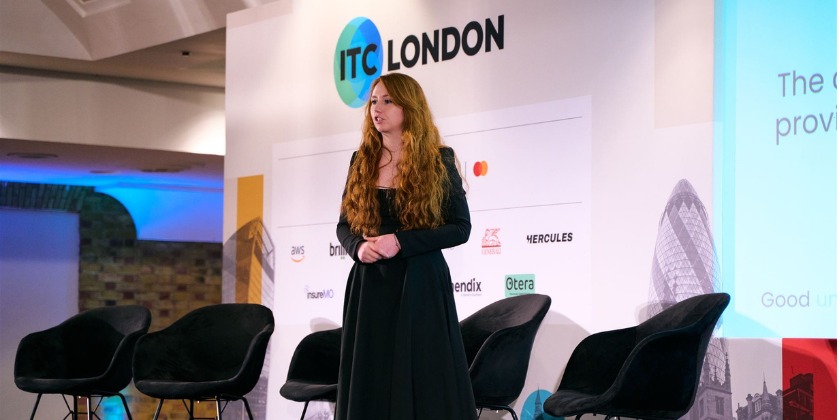
Tierney Hill, Program Manager at SiriusPoint, and Clare Knight, Managing Director at Bspoke Underwriting, joined forces this week to dissect and discuss what customer centricity really means during a keynote presentation at ITC London.
What are we doing with the insight?
Today’s digital-first, value-driven customers expect clarity, simplicity, and relevance, and they reward brands that deliver it. Increasingly, leading insurers and MGAs are recognising that customer centricity must be embedded across all operations, not only in claims.
Clare opened the discussion by describing a challenge many insurers will recognise. Her team were seeing streams of valuable customer feedback, from onboarding, product governance, audits, complaints analysis, claims, and sales channels. Yet no one was responsible for bringing all that insight together and turning it into meaningful action.
That changed when they introduced the concept of a Customer Champion.
“The feedback was coming in, but was it really having an impact? We needed someone who could join the dots and ask: what does this mean for the customer, and how do we fix it?”
The Customer Champion role now acts as an internal advocate for the voice of the customer, identifying friction points and pushing for tangible solutions across the business.
Is a written policy going far enough?
One of the strongest themes of the session was the power of language. Insurance is built on words: the promises made, the exclusions applied, the protections offered. Yet policy wordings continue to be written in terminology that customers simply don’t understand.
Clare highlighted research by Browne Jacobson and Nottingham University’s linguistics team, which concluded that insurance documents should be readable and understandable to a 12‑year‑old.
To test this, Clare’s Customer Champion handed a live policy wording to his own 12‑year‑old son.
The results were sobering. Simple but essential terms such as malicious, sum insured and communal were unclear.
“If the 12‑year‑old doesn’t understand it, the first‑time buyer certainly won’t. We need to design policies that people can genuinely understand.”
This exercise triggered a wider initiative: a full review of all policy wordings, supported by focus groups of real customers, to ensure products are both clear and meaningful.
Redesigning interaction
The conversation shifted to how insurers can communicate more proactively and intuitively, especially during high‑stress events like storms.
Could visuals replace jargon? Could simple prompts help customers understand what is and isn’t covered before they ever need to claim? Could claims communications be radically simplified?
Clare shared her own customer experience. Even as an insurance professional, it took her ten minutes to locate a claim number buried in a notification email.
“If it’s that hard for me, imagine what it’s like for a customer who has never claimed before.”
For her, the goal is clear: make insurance radically easier to understand and use.
From capacity to customer
Tierney expanded the lens, reflecting the capacity provider’s role in partnering with the MGA to drive better customer outcomes. SiriusPoint uses its own Consumer Champion to trace the entire customer journey, identifying where improvements can be made and confusion avoided.
She emphasised a critical point: while the Customer Champion’s view is imperative and can help shape policy wordings, true insight must also come from actual customer behaviour, and that’s where collaboration with MGAs becomes essential.
“We set the benchmark as capacity providers, but MGAs are closest to the customer. They share with us what customers actually understand and what they don’t.”
Tierney also addressed why customer centricity remains important.
“It reduces disputes, reduces complaints, improves communication, and boosts retention.”
A long-term portfolio approach to customer satisfaction – or customer delight, which is the real aim – depends not on squeezing customers into neat underwriting brackets, but on evolving with their needs throughout the policy lifecycle.
“Policies written on Day 1 may no longer fit 200 days later as circumstances change. Proactive communication can close this gap and ultimately strengthen both customer trust and underwriting robustness.”
A call for industry-wide collaboration
Clare and Tierney closed with a shared view: real transformation requires partnership. Shared data, shared accountability, shared ambition, and never forgetting the person at the end of the buying cycle.
Customer centricity isn’t a claims strategy or a compliance tick-box, it’s how sustainable insurance businesses are built.
“Only by partnering with strong MGAs, and empowering them with insight, can we raise the bar for customers – together,” Tierney concluded.